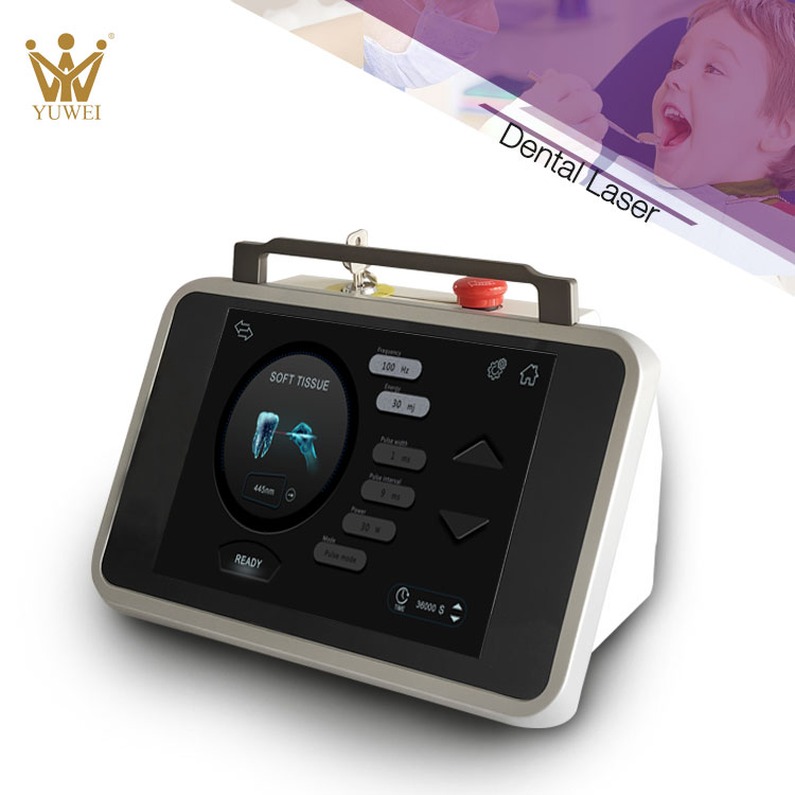
What Treatments Are 1470nm Dental Lasers Suitable For? Why So Many Dentists Choose Them
With the continuous advancement of dental technology toward more minimally invasive and comfortable treatments, laser devices have become indispensable in clinical practice. In particular, the 1470nm wavelength laser is increasingly appreciated by professionals due to its unique tissue absorption characteristics and excellent performance in soft tissue applications. But what treatments is it best suited for? And why do so many dentists choose it? Let’s find out.
1. Technological Advantages of the 1470nm Laser
The 1470nm laser belongs to the near-infrared band and is highly absorbed by water within tissues. This allows for effective superficial vaporization with minimal thermal diffusion, greatly reducing the risk of damaging healthy surrounding tissue.
Additionally, its combination of precise cutting, immediate hemostasis, and low carbonization makes the 1470nm laser ideal for delicate and targeted dental surgical procedures.
2. Dental Treatments Ideal for the 1470nm Laser
1. Gingivectomy and Gingival Contouring
The laser enables clean and precise cuts with simultaneous coagulation. As a result, there’s less bleeding, a clearer surgical field, and faster healing. It’s ideal for gingival overgrowth, short clinical crowns, or aesthetic gingival adjustments prior to prosthetics.
2. Periodontal Therapy and Pocket Disinfection
The laser can penetrate infected tissue to eliminate bacteria and stimulate healing. It is especially useful in chronic periodontitis cases, helping reduce pocket depth and inflammation.
3. Root Canal Disinfection
In endodontics, the 1470nm laser can sterilize root canals at a microscopic level, reaching dentinal tubules that traditional irrigants cannot. It improves the long-term success of root canal treatments.
4. Peri-implantitis Treatment
The laser is highly effective at decontaminating implant surfaces without damaging the titanium. It can also remove inflamed tissue and support soft tissue regeneration—especially beneficial in early-stage peri-implantitis.
5. Frenectomy (Lingual or Labial)
A quick and precise procedure, usually performed without bleeding or sutures. Particularly suitable for children and patients with dental anxiety.
6. Oral Lesion Treatment and Hemostasis
For mucoceles, fibromas, and other benign lesions, the laser enables non-invasive vaporization, with immediate bleeding control and reduced risk of infection, leading to faster recovery.
3. Why Dentists Choose the 1470nm Laser
| Key Benefit | Description |
|---|---|
| Controlled precision | Superficial penetration with minimal tissue trauma |
| Immediate hemostasis | Clean surgical field and shorter procedure times |
| Low thermal damage | Less carbonization, faster healing |
| No sutures needed | Ideal for outpatient and minor soft tissue surgery |
| Better patient experience | Less pain, less anxiety, faster recovery |
4. A Device Aligned with the Future of Dentistry
In today’s dentistry—where patient comfort and clinical efficiency are key—the 1470nm laser offers a way to improve treatment quality and reinforce your clinic’s professional image. Across Europe, America, and Asia, more clinics are adopting it as a standard tool for periodontal and soft tissue procedures.
Conclusion
The 1470nm dental laser is more than just a technological upgrade—it represents a new treatment philosophy: safer, more precise, and more comfortable. If your goal is to elevate your clinical practice and offer modern, less invasive solutions to your patients, then a 1470nm laser is an investment worth making.
Advantages of 980nm Dental Laser in Soft Tissue Treatment
Understanding 980/1470 Dental Lasers: A Modern Solution for Soft Tissue Treatment