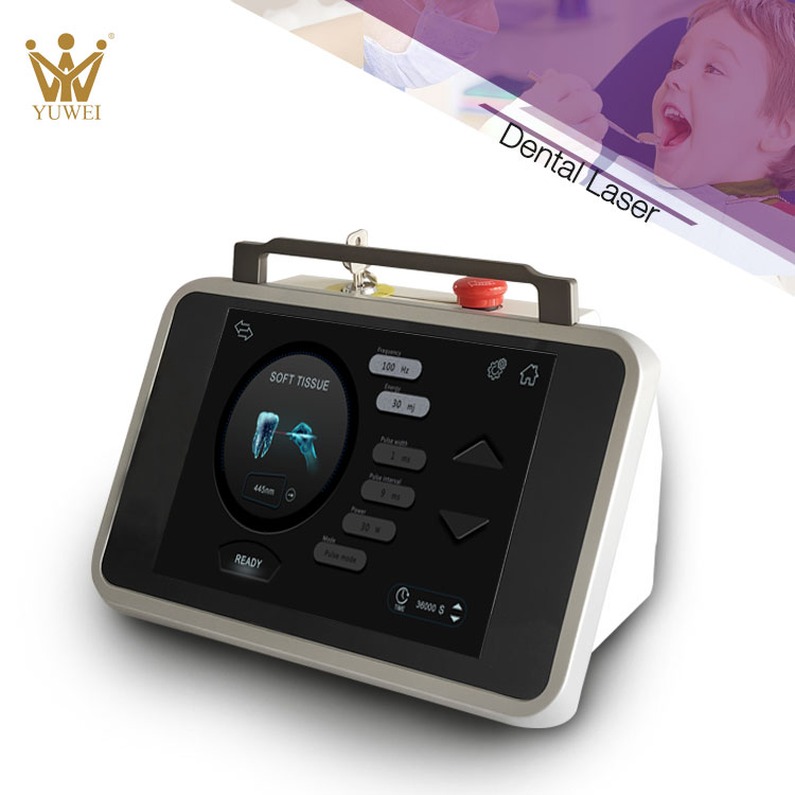
Advantages of 980nm Dental Laser in Soft Tissue Treatment
As dentistry continues to evolve, the demand for tools that enable safer, more precise, and minimally invasive procedures has never been greater. One of the standout innovations in this space is the 980nm dental laser. With its unique wavelength and advanced fiber delivery system, the 980nm diode laser is transforming soft tissue treatments by enhancing surgical precision, improving healing, and minimizing patient discomfort.
1. Precision Surgery with Immediate Coagulation
The 980nm laser wavelength is highly absorbed by hemoglobin and moderately absorbed by water, making it extremely effective for soft tissue cutting and coagulation. Unlike traditional blades or electrosurgical tools, the laser allows clinicians to perform precise incisions with excellent hemostasis, ensuring a clear and bloodless surgical field. Whether you're performing gingivectomy, frenectomy, operculectomy, or fibroma excision, the 980nm laser delivers clean results with minimal collateral tissue damage.
Its photothermal effect seals blood vessels and lymphatics instantly, reducing intraoperative bleeding, swelling, and postoperative edema. This not only shortens procedure times but also enhances clinician control during surgery.
2. Powerful Disinfection for Periodontal and Peri-Implant Therapy
One of the key advantages of the 980nm diode laser is its antibacterial and anti-inflammatory capabilities. In periodontal therapy, the laser energy penetrates deep into periodontal pockets, disrupting bacterial biofilms and sterilizing the tissue. It significantly reduces microbial load and inflammation, promoting tissue regeneration and reducing the likelihood of reinfection.
The 980nm laser is also highly effective in peri-implantitis management, offering a minimally invasive approach to clean contaminated implant surfaces and treat surrounding inflamed soft tissues without damaging the titanium surface.
3. Enhanced Patient Experience and Faster Healing
Compared to conventional surgical techniques, the 980nm dental laser is less invasive and more comfortable for patients. The laser causes minimal thermal damage to adjacent tissues, which translates to:
-
Less intra- and postoperative pain
-
Minimal bleeding and swelling
-
Reduced need for sutures
-
Faster healing and tissue recovery
Patients often report a smoother post-op experience and require fewer analgesics or antibiotics, improving overall satisfaction and compliance with treatment plans.
4. Broad Clinical Applications in Everyday Dentistry
The 980nm dental laser is not limited to just surgical use. It is a versatile platform suitable for:
-
Gingival contouring and crown lengthening
-
Soft tissue management around implants
-
Periodontal pocket decontamination
-
Treatment of oral ulcers, aphthous stomatitis, and herpetic lesions
-
Laser-assisted teeth whitening
-
Minor surgical interventions in pediatric dentistry
-
Operative use in orthodontic exposure of impacted teeth
The compact design, coupled with an ergonomic handpiece and flexible fiber, ensures maximum control and maneuverability, even in challenging intraoral areas.
5. Improved Infection Control and Clinical Safety
In today’s infection-sensitive environment, especially post-pandemic, the 980nm laser provides a safer alternative to rotary instruments and electrosurgery. Because it produces less aerosol, it helps minimize the risk of airborne contamination. Its contactless action also supports high standards of hygiene and reduces cross-contamination between patients.
6. Economic Value and Clinical Efficiency
Beyond clinical performance, the 980nm diode laser offers excellent return on investment. Its low maintenance cost, long diode life, and compatibility with multiple fiber sizes and handpieces make it a practical tool for general dentists, periodontists, implantologists, and oral surgeons alike. The ability to perform multiple procedures with one system streamlines workflow and reduces reliance on additional instruments.
Conclusion
The 980nm dental laser represents a powerful blend of precision, safety, and versatility. It enables clinicians to elevate their soft tissue treatments by offering cleaner incisions, faster healing, enhanced antibacterial effects, and greater patient satisfaction. Whether you're managing periodontal disease, reshaping gingiva, or treating mucosal lesions, this advanced laser system empowers your practice to deliver modern, minimally invasive dentistry.
If your clinic is looking to expand its service offerings, improve surgical outcomes, and provide a superior patient experience, integrating a 980nm dental laser into your workflow is a smart and future-forward decision.
How to Choose Dental Laser Fiber? – A Complete Guide
What Treatments Are 1470nm Dental Lasers Suitable For? Why So Many Dentists Choose Them